
Biodiversity: How to Make a Small Wildlife Pond
By Kira Tackett
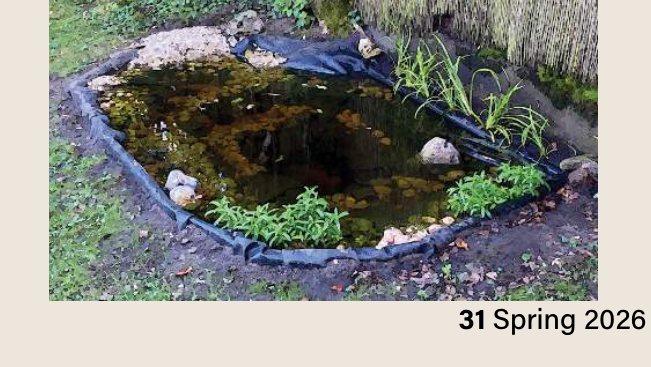
There are many ways to turn our homes and gardens into places which foment biodiversity and invite in the Community of Life, which we are part of. One of them is to build a wildlife pond. Birds, insects, amphibians, snails, among others, enjoy it and benefit from it too.
Step 1: Dig and shape the pond
Every pond begins with a hole in the ground. The layering creates different pond zones and habitats, of which the central area is the deepest to help pond dwellers survive the winter. The wooden boards and stones provide structural support at the edges.
Step 2: Add the liner
A single layer of EPDM liner retains the water. Below it, a layer of nonwoven underlayment serves as extra protection against stones and roots. Some planning and calculations are needed to select an adequate surface area.
Step 3: Place the rocks
Rocks are distributed around the different zones and layers to create habitat space, internal divisions and solid support for plant soil.
Step 4: Add substrate
Muddy soil between the rock sections provides substrate for the various plants.
Step 5: Plant it out
The pond is enriched by carefully selected local species of water plants depending on their pond zone. A mixture of small and tall plants as well as flowering ones offer a good variety for different species’ needs.
Enjoying NatiPets?
Read the latest issue of Greater Cincinnati's pet magazine, free, or share your own pet's story with our community.